Murphy Authors One of Twelve Bills Passed During Special Session
Rep. Jim Murphy
Austin, TX – State Representative Jim Murphy (R-Houston) joined Governor Greg Abbott for a bill signing ceremony on Wednesday for House Bill 215, a bill authored by Rep. Murphy during the 85th Special Session that ensures abortions performed on minors are properly reported.
“This new law provides information to ensure this procedure is carried out properly and to gather information that will be used to improve public health. Its passage is particularly important given the bill’s focus on girls under 18 years old.” said Murphy. As a result, better data will be collected and provided to lawmakers and the Department of State Health Services for use in evaluating state programs.
Improving abortion-complication reporting was part of Governor Abbott’s 20-item agenda for the special session. The bill was proposed and drafted by Senator Bryan Hughes (R-Mineola). HB 215 passed the House with bipartisan support and was passed in the Senate by Sen. Hughes. “When abortions occur, especially on minors, Texas must do everything possible to protect these young mothers. Thanks to this law, we will now have more accurate data concerning abortions being performed on minors. I am thankful for the leadership of Sen. Bryan Hughes and Rep. Jim Murphy in getting this bill to my desk, and I applaud the Texas legislature for passing this important reform this special session.” stated Governor Greg Abbott.
State Representative Jim Murphy represents District 133, West Houston. First elected in 2006, Murphy serves as Chairman of the House Committee on Special Purpose Districts and is a member of the Ways & Means Committee. Murphy also serves as Floor Leader for the House Republican Caucus. In addition to his work during the special session, Rep. Murphy passed fourteen bills during the 85th Regular Session.
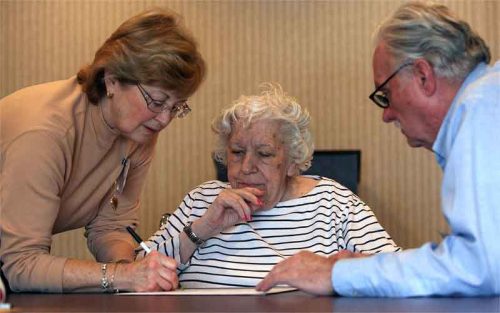
Click picture to read ‘Group warns of ‘vote harvesting’ at nursing homes’Ed Hubbard
I was shocked to learn from my friend and colleague, Alan Vera, of the reversal and repeal of the nursing-home voting law (designed to prevent voter fraud) by the House during the current special session. Now, having read this article on the website for the Austin American-Statesman, Texas Two Step: House stiffens penalties for nursing home ballot fraud while repealing a bipartisan solution, I think the public record needs to be corrected about how this bill evolved to passage during the 2017 Regular Session.
I have served as the Legal Counsel to the Harris County Republican Party since July, 2014 (this post is not an official statement by or on behalf of the HCRP, but instead, contains my own personal statements and opinions). In that capacity, I have worked closely with Alan Vera and with our county election officials during each election cycle since (and including) the 2014 General Election, Immediately after that election, Alan discussed with me reports he had heard about abuse of mail-in ballot applications and voting at nursing homes and other long-term care facilities in Harris County, across the state, and across the country, and he introduced me to the law that Wisconsin had adopted to address this issue. Convinced of its merit, I worked with Alan to prepare an initial draft of a similar law for Texas.
Simply put, this bill changed the process from one that created the conditions by which persons other than the voter could fill-out the applications, obtain access to the ballots and “vote” for the voter, to a process whereby an election judge and representatives of each political party met with and witnessed the vote of each voter to assure that they wanted to vote, had the capacity to vote, and were casting their own vote. Although the process of recruiting and training such election officials would add some burden to local governments, the financial impact would be minimal while the benefit to the integrity of the voting process and the protection of vulnerable voters would be priceless.
Prior to the 2105 Regular Session, I discussed this proposal with a GOP member of the Texas Senate and worked with his office to prepare a draft of such a bill. Unfortunately, the draft prepared by the Legislative Counsel and the Senator’s office was not completed in time to introduce the bill in 2015; but Alan and I continued to work with the draft over the next year to have it ready to introduce in the 2017 Session. In the meantime, we obtained further input from our local election officials, the Secretary of State’s office, and lawyers with the Republican Party of Texas to improve the language of the bill.
This draft was circulated to members of the Harris County legislative delegation in 2016, and Rep. Oliverson enthusiastically supported the bill and agreed to sponsor it in the House. Additionally, Rep. Schofield supported our effort and prepared an alternative draft for introduction. Our local election officials, and a counsel for the RPT, Eric Opiela, supported our effort and worked with Alan and Rep. Oliverson, as well as Rep. Schofield to improve the bill both before and after it was introduced. Eventually, Senator Joan Huffman threw her support behind the bill in the Senate, and worked with Alan and Eric to further improve the bill. Prior to that time, no Democrat had participated in the preparation of the proposed bill.
However, through the efforts of these legislators, some local election officials, Alan and Eric, the bill quickly drew bi-partisan support because the corruption of the mail-in ballot process at nursing homes and long-term care facilities apparently had impacted some Democratic primaries races. In fact, the only real opposition to the bill during its movement through the legislature came from certain county election administrators who either did not understand, or chose to ignore, how the law would work, and how it had been successfully implemented in Wisconsin—in a bi-partisan way. These people proved to be impervious to any reasonable discussion of the merits of the bill, and simply folded their arms and stomped their feet in opposition—they obviously preferred the status quo rather than have to do a little bit more recruitment and training of election volunteers in their counties.
And, as an aside, it is nonsense to believe that this law would benefit one party (Democrats) over another (Republicans) in the General Election. In fact, the evidence in Wisconsin has shown that the Republican Party has grown in that state, and won more state and local elections, after implementation of the law (which makes sense when you consider that the GOP usually polls better in the over-65 age group than the Democratic Party).
Unfortunately, some people have chosen to give credit to the rhetoric used by some Democratic supporters to persuade their colleagues to support the bill, rather than actually learn who drafted the law, why the law was drafted, and to see and understand the merits of the law that was passed. These critics have elevated the sausage-making, partisan rhetoric during the heat of the legislative process to gospel, and then used such rhetoric as an excuse to kill this landmark law. This is the gutless legislative equivalent of being scared by your own shadow, and says more about the bankrupt views of these critics than it does of the law they want to kill.
The bi-partisan support for and passage of this bill, which would have addressed a real voter-fraud problem acknowledged by both parties and public officials, should have been a proud moment for our state and our elected officials. Instead, it has been hi-jacked and repealed by those who now must own and defend a status quo that takes advantage of some of our state’s most vulnerable voters.
I want to thank Rep. Oliverson, Rep. Roberts, and Senator Huffman, as well as all of those legislators from both sides of the aisle who bravely supported this bill. Likewise, the next time someone from our party complains about voter-fraud, Governor Abbott and Rep. Goldman need to take a long look in the mirror and realize they now have endorsed continuation of voter fraud, rather than having embraced a proven way to stop it.
As for the person quoted in the Austin American-Stateman article—Aaron Harris, whoever he is—if Rep. Oliverson or Alan Vera don’t take him up on his offer to debate the merits of this bill, I’ll gladly meet him in any public forum to do so—his position is simply ridiculous.
I keep telling you that Speaker Joe Straus isn’t the problem but groups keep focusing on him with their ‘Oust Straus’ mantra.
Meanwhile:
Eight days away from the deadline to approve bills, the prognosis for Gov. Greg Abbott’s 20-item special session agenda is murky at best.
Not a single measure has made it to the governor’s desk despite a steady drumbeat from his office urging lawmakers to go “20 for 20” since weeks before the special session began.
The most high-profile item on Abbott’s list – a measure barring some transgender people from using bathrooms that match their gender identity – is on life support. House State Affairs Chairman Byron Cook, R-Corsicana, said Tuesday he will not give the “bathroom bill” a hearing in his committee
Sure, Speaker Straus appointed Cook but Cook isn’t doing the Speaker’s bidding. He is doing the bidding of the majority of the Republican caucus’ bidding. The Speaker is willing to take the heat because that is how he views his job. Texas Monthly’s R.G. Ratcliffe published the best interview by far of the Speaker in recent memory. I hope you take the time to read the entire interview, I think it will help give you some perspective on why the Speaker does what he does.
RGR: I’m thinking of the primary contests. Does this become a litmus test?
JS: Those groups live and breath litmus tests. We try hard in the House to keep people together and focusing on issues that really matter to the future of the state. School finance reform, and property tax is closely associated with that, and others. So it would be a never-ending quest to try to satisfy some of those groups and their litmus testing. The House has gotten pretty good at ignoring the threats toward people by entities like that.
RGR: The lieutenant governor last week refocused his attention on attacking cities as Democratic strongholds, and even some of the Republican mayors expressed to the Morning News frustration with trying to make their case with the governor on tax cuts.
JS: Dan Patrick has a history of trying to pit people against each other, and in the House we try to focus on what made Texas a success, not looking to blame anybody, but trying to focus on solving problems. It’s a signal of national politics seeping into Texas. Divisive rhetoric like that doesn’t solve problems.
RGR: Has that hurt the Republican brand in Texas?
JS: You can’t look at elections and say that it has, but it also hasn’t helped us address in meaningful ways some of the problems of the state.
It’s good to see the Speaker saying ‘we’ again instead of ‘I’. Perhaps he realized his mistake during the regular session of making it seem like it is his agenda instead of the agenda of the Republican caucus as a whole.
I’d suggest that those focusing on Speaker Straus would have a much better time of it if they focused instead on the Republicans that say one thing during a campaign and another thing when they get elected. Like Rep. Byron Cook, who has decided that the House shouldn’t vote on the privacy protection act. Turns out that 225 Texas voters are responsible for blocking the House from voting on the privacy protection act. Here are the results from last year’s Republican Primary in District 8 (Corsicana, Palestine).
Almost 9 million Texans voted in last November’s election.
I think Cook (and Speaker Straus) are making a huge mistake by not allowing a vote. At this point it is beyond clear that the House will vote against the privacy protection act. If allowed, that would take all of the wind out of the sails of those that are truly dividing Texas Republicans. But apparently, the caucus is allowing fear to rule the day.
That’s the message from Linda Dewhurst regarding privacy protection, aka ‘the bathroom bill’:
From the InBox:
Texas Women Leading the Charge to Protect Privacy
AUSTIN – Texas women are taking the lead when it comes to protecting privacy and dignity in our showers, restrooms, and locker rooms.
As just one recent example of this groundswell of support, Linda Dewhurst of Houston recorded a video in support of the Texas Privacy Act that has surpassed 330,000 views in less than a week.
“As a longtime resident of Houston, I know first-hand why it’s important that we pass this statewide bill,” Dewhurst said. “In fact, if the Texas House allows men into girls’ bathrooms, it is very likely the Houston city council will try again to pass a bathroom ordinance like the one we defeated in 2015 that would have forced even private businesses to allow men into girls’ bathrooms.”
In addition to Nicole Hudgens, Texas Values Policy Analyst and up-and-coming Millennial leader, we recommend the following, notable women who support privacy legislation for consideration in media coverage on the Texas Privacy Act.
Cindy Asmussen – Ethics & Religious Liberty Advisor with the Southern Baptists of Texas Convention and Legislative Director with Concerned Women for America of Texas.
Trayce Bradford – President of Texas Eagle Forum and mother of seven.
Sunny Cardenas – a Dripping Springs ISD mother and community member speaking up for the voiceless and forgotten.
JoAnn Fleming – Executive Director of Grassroots America/We The People, an influential network of statewide activists.
Kaeley Triller Haver – President of Hands Across the Aisle, outspoken privacy activist and writer, sexual abuse survivor.
Dana Hodges – Director of Concerned Women for America of Texas, victim of privacy violation in a public restroom via a video camera disguised as a clothing hook.
Nikki Kelton – Dripping Springs ISD parent demanding transparency for the school district’s un-vetted policy allowing boys in girls’ restrooms and locker rooms.
Allison Kelly – Fort Worth ISD mother, one of the parents speaking out against the Fort Worth Superintendent’s policy allowing boys into girls’ restrooms and locker rooms.
Sen. Lois Kolkhorst – Author of the Senate Texas Privacy Act, former NCAA athlete concerned about the door being opened to biological men competing in women’s sports.
Pastor Ericka McCrutcheon – Co-Pastor of Joint Heirs Fellowship Church in Houston, successfully fought against Houston’s “bathroom ordinance” that was defeated by voters 61-39 percent.
Susan Rodriguez – Law enforcement officer of more than three decades, community activist who points out the safety hazards of local policy that allows men into intimate facilities with women.
Shiloh – 10-year-old Dripping Springs ISD student who, along with her father Rob, has been speaking out in favor of legislation designed to keep boys out of her schools restrooms and changing areas.
Angela Smith – Horseback riding trainer and mentor to young girls concerned about the ramifications of local laws that compromise safe spaces.
ADDITIONAL INFORMATION
Our Protect Privacy page contains helpful resources including radio ads featuring some of the aforementioned women, an archive of our press releases on the privacy issue, video testimony, and fact sheets on the Texas Privacy Act: http://www.txvalues.org/ProtectPrivacy
# # #
You know, this is not the ‘complex’ issue that business leaders are being coerced into saying it is. It is really quite simple. As I noted here, the act proposed by Rep. Simmons (and supported by 80 House members) is not discriminatory in any way, shape or form. In fact, it PROTECTS businesses from government interference in their operations. As well, it protects all Texans by not allowing political subdivisions, be they county, city or any other entity, from discriminating against anyone.
Has anyone thought about this scenario? If the Texas Legislature does nothing, political subdivisions can make laws prohibiting certain people from going certain places, just as easily as political subdivisions now make laws forcing people to allow certain people into certain places. Both are wrong and bad policy.
Speaker Straus should allow the Texas House to vote. Let the measure be defeated or let it be passed but let the voters of Texas know where their elected Representatives stand. If Speaker Straus is correct in his assessment that privately the vast majority of members have told him they do not want this law passed, why shouldn’t the voters know? In fact, if he allows the vote and it fails, the Republicans will be in a stronger position. Why does everyone think they will be in a weaker position if they vote their conscience or their districts?
If I were a LGBTQABC activist, I would be demanding a vote so that I would know who to target.
It is sad that it has come to this in Texas. Or anywhere else for that matter. Speaker Joe Straus and the majority of the Texas Republican Caucus, led by Rep. Tan Parker, are supporting an aggressive agenda led by the anti-science progressive wing of the Democratic Party to redefine the definition of human beings.
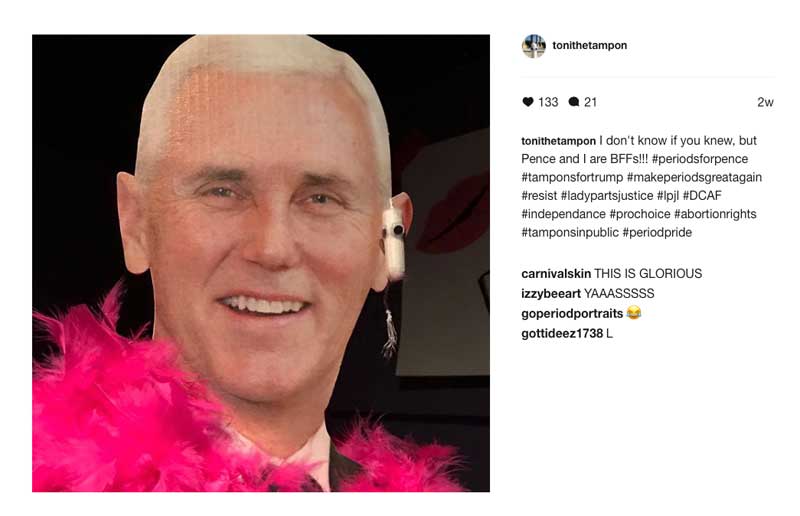
Clemmer, who works as a menstrual health activist, told HuffPost that they decided to stage the photo after the backlash to The Adventures of Toni the Tampon: A Period Coloring Book a coloring book they created to introduce kids of all genders to the human experience of menstruation.
Obviously, that is anti-science. It is a plain fact of science that women are the only human beings that menstruate. But the aggressive, anti-science agenda from the LGBTQ-59 crowd is working, make no mistake about that. Think about that paragraph above.
A coloring book. Kids. The destruction that progressives have done to our public schools.
Then read the Texas Tribune’s account of an abused young boy who testified against SB 3, a bill which is described by the left-leaning political journalists in Texas as a ‘bathroom bill’.
Despite losing bathroom bill fight, a transgender girl gets her two minutes
“Can we talk about whether you’re going to testify?” Rachel prodded lightly.
“I’m scared,” Libby responded in a quiet voice with a shrug of her small shoulders. While she’s giggly and playful around her siblings, she’s extremely shy around people she doesn’t know.
“It’s OK to be scared,” Rachel said, running her hand through Libby’s chestnut curls.
…
Her head barely clearing the top of the green chair, Libby looked down at her testimony.
…
“I am seven years old, and I am transgender,” Libby told the senators facing her. “I love my school and my friends, and they love me, too. I don’t want to be scared to go to the restroom in anywhere public. And I never ever want to use the boys’ bathroom. It would be so weird. Please keep me safe. Thank you.”
That is heartbreaking. It truly is. In a reasonable, rational society, those parents would be charged with child abuse. Instead, they are celebrated by the anti-science progressives and the majority of Republicans in the Texas House. If only there were a law to protect that child from his parents. Those parents should be providing mental health care for their son, not using him as a prop in a sick game.
Fortunately, the Republicans in the Texas Senate didn’t fall for the emotional testimony of an abused child and voted to send SB 3 over to the House.
Unfortunately the Republicans in the Texas House are ready to accept that abuse, as they did in the regular session. They are apparently scared that popular culture will demand that corporations refuse to do business in Texas if they don’t allow the anti-science progressive agenda, complete with Toni the Tampon coloring books, to corrupt our state. I think they call it the business vote, even though the facts do not support their case.
In case you don’t know, the Texas House of Representatives is dominated by Republicans by almost a 2-1 majority. And yet, the anti-science progressives are poised to win this battle. What is it again that Texas Republicans are supposed to stand for?
Science says that no, men do not menstruate.
There are only a few Texas House Republicans against this nonsense, perhaps 14 or 15, that are willing to defy the majority of Republicans and 100{997ab4c1e65fa660c64e6dfea23d436a73c89d6254ad3ae72f887cf583448986} of the Democrats who are anti-science and who want to redefine male and female biology. What a damn shame.
Join us THIS WEDNESDAY, June 14 (Flag Day!), for our meeting with State Sen. Joan Huffman, SD 17, who will be discussing this year’s very active Texas legislative session, at Theo’s Restaurant on 812 Westheimer. Our social half-hour starts at 6:30PM, and the general meeting gavels into session at 7:00PM.
This could be a very interesting meeting given that Sen. Huffman’s signature piece of legislation, Senate Bill 2190, took money from away from firefighters in Houston and gave it to police and municipal employees.
Or not. Depends upon who shows up I guess.
I don’t doubt the good intentions of Sen. Huffman, just like I don’t doubt the good intentions of my state rep, Dennis Paul, that supported Sen. Huffman’s efforts. I am skeptical however of the end result of supporting a plan by Houston Mayor Sylvester Turner that strips benefits from firefighters and gives them to other city employees. In fact, I haven’t found a single person, including the elected officials that voted for this reduction in benefits to some employees at the expense of others, that will state unequivocally that it will actually work to keep the City of Houston from bankruptcy.
I haven’t been to a meeting of the LCR in a while, maybe this week is a good week to attend. If I do, I hope to see you there.